
The IRS Audit Letter Guide: A Former Insider Explains What Your Notice Actually Means
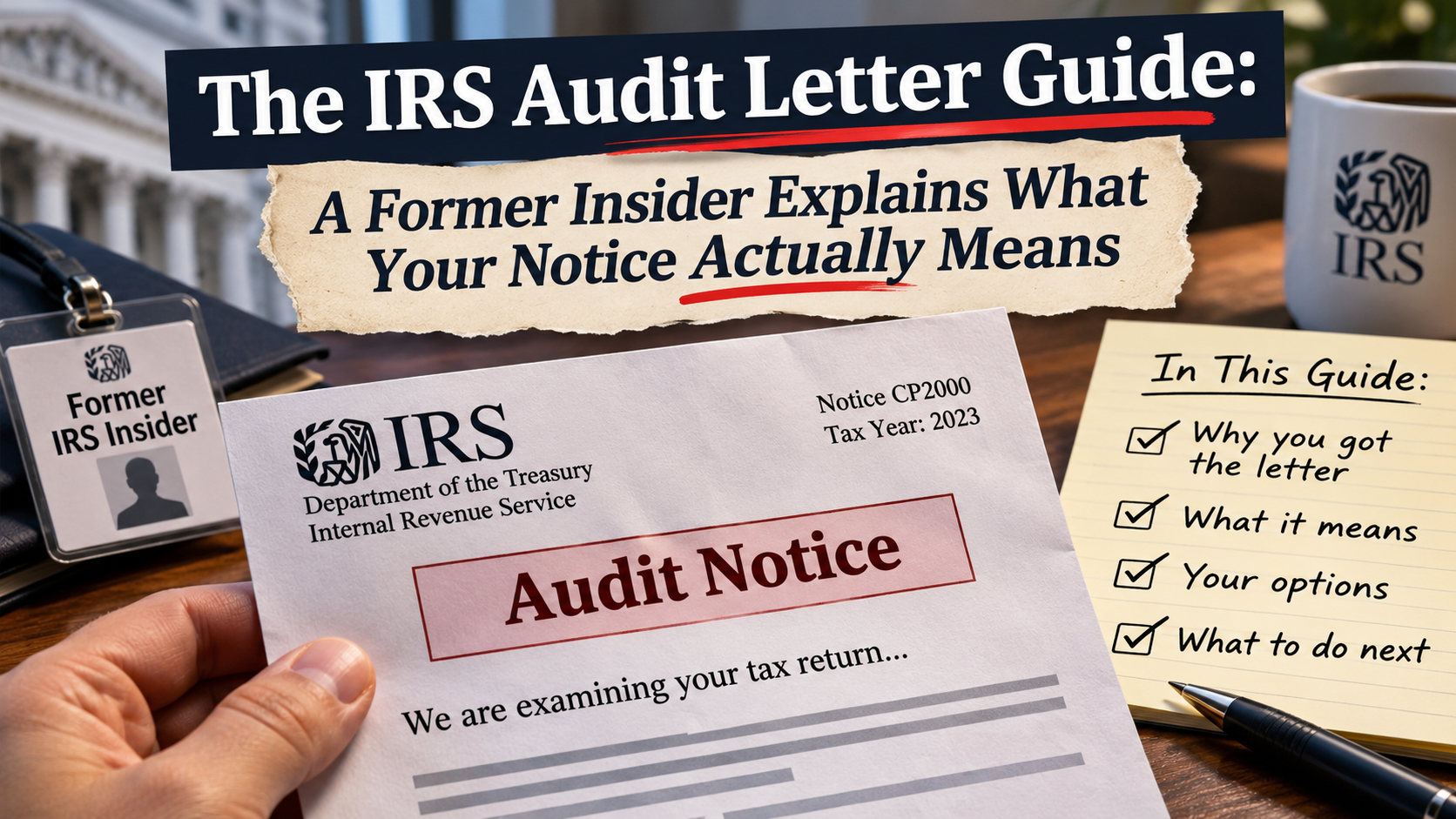
Opening your mailbox to find a certified envelope from the Internal Revenue Service is an immediate gut punch for any business owner.
IRS notices are intentionally drafted in dense, cold, bureaucratic language. That ambiguity is by design: the agency knows that confusion breeds anxiety, and anxious taxpayers make critical procedural mistakes—offering unprompted explanations, handing over unfiltered records, or blindly signing off on assessments they do not actually owe.
Not every IRS notice carries the same legal weight. Some are automated computer mismatches; others mean a field examiner is actively pulling transcripts and scrutinizing your business deductions.
If a notice landed on your desk, check the top right corner of the first page to identify the form or letter code. Here is an insider breakdown of the five most common IRS examination notices, what the examiner is actually evaluating, and how to protect your business before deadlines expire.
1. Letter 2205 (A/B): The Initial Examination Notice
The Bureaucratic Reality: Letter 2205-A (for individuals) or Letter 2205-B (for businesses) is the official notification that your return has been selected for examination. It details the tax year under review and requests an initial contact or scheduling conference.
The Insider Truth: Returns are rarely pulled at pure random. If you received Letter 2205, your return triggered high Discriminant Information Function (DIF) scoring algorithms or fit a specific national enforcement campaign (such as officer compensation, cash-intensive businesses, or 1099 classification). Before this letter was mailed, the examiner spent hours building a case file, comparing your profit margins against industry standards, and drafting an investigative theory.
The Tactical Warning: Never pick up the phone to "just explain things" to the examiner yourself. Revenue Agents and Tax Compliance Officers are trained interviewers. Casual questions about your daily commute, family members on the payroll, or personal hobbies are carefully designed to establish economic reality and substantiate statutory adjustments. Every word you utter is recorded in the agent's workpapers and becomes part of your permanent case history.
Received Letter 2205? Do not contact the auditor alone. By filing an IRS Power of Attorney (Form 2848), an Enrolled Agent steps directly between you and the government. Under federal procedural rules, once you designate representation, the examiner must contact your representative directly, meaning you never have to face the auditor in person.
2. Form 4564: Information Document Request (IDR)
The Bureaucratic Reality: The IDR is a structured document list requesting specific verification: general ledgers, bank statements, canceled checks, mileage logs, vendor invoices, or independent contractor records.
The Insider Truth: The IDR is the procedural battlefield of an audit. Revenue Agents use the initial IDR not just to gather receipts, but to test the credibility of your entire accounting system. If you miss deadlines or produce disheveled records, examiners interpret that as poor internal controls, giving them justification to expand the examination.
The Tactical Warning: Avoid the "document dump." Handing an examiner an unfiltered QuickBooks file, an unsorted shoe box, or financial folders containing unrequested tax years is disastrous. If an examiner discovers an anomaly in an unrequested account or non-audited tax period, they have the procedural foundation to issue supplemental IDRs and expand the audit’s scope. You must produce strictly what was requested—substantiated, indexed, and reconciled to the exact line items on the tax return.
3. Letter 525 & Form 4549: The 30-Day Letter & Proposed Adjustments
The Bureaucratic Reality: Form 4549 (Income Tax Examination Changes) lists the auditor's proposed adjustments to your taxable income, alongside calculated interest and statutory penalties. Letter 525 gives you a 30-day window to agree and sign the adjustments, or file a formal protest.
The Insider Truth: Examiners routinely issue maximum penalty assessments—such as the 20% accuracy-related penalty under IRC §6662—by default, counting on the taxpayer’s exhaustion. Many taxpayers mistakenly believe Form 4549 is a mandatory final bill. It is not; it is simply the examiner’s opening post-audit position. Revenue Agents frequently misapply nuanced sections of the Internal Revenue Code, miscalculate basis, or disallow legitimate business deductions due to strict documentation interpretations.
The Tactical Warning: Do not sign Form 4549 if you disagree with the findings. Signing consents to the immediate assessment of tax and forfeits your standard administrative dispute rights. Instead, you must act before the 30-day clock runs out by filing a formal written protest to transfer your case to the IRS Independent Office of Appeals. Appeals Officers are distinct from field auditors: their mandate is to settle disputes based on the "hazards of litigation" to keep the government out of court.
Facing a 30-Day Deadline? If an examiner proposed adjustments that threaten your cash flow, do not sign Form 4549 without a professional review. We analyze the examiner's workpapers, identify procedural errors, draft technical appeals protests, and negotiate penalty abatements directly with IRS Appeals Officers.